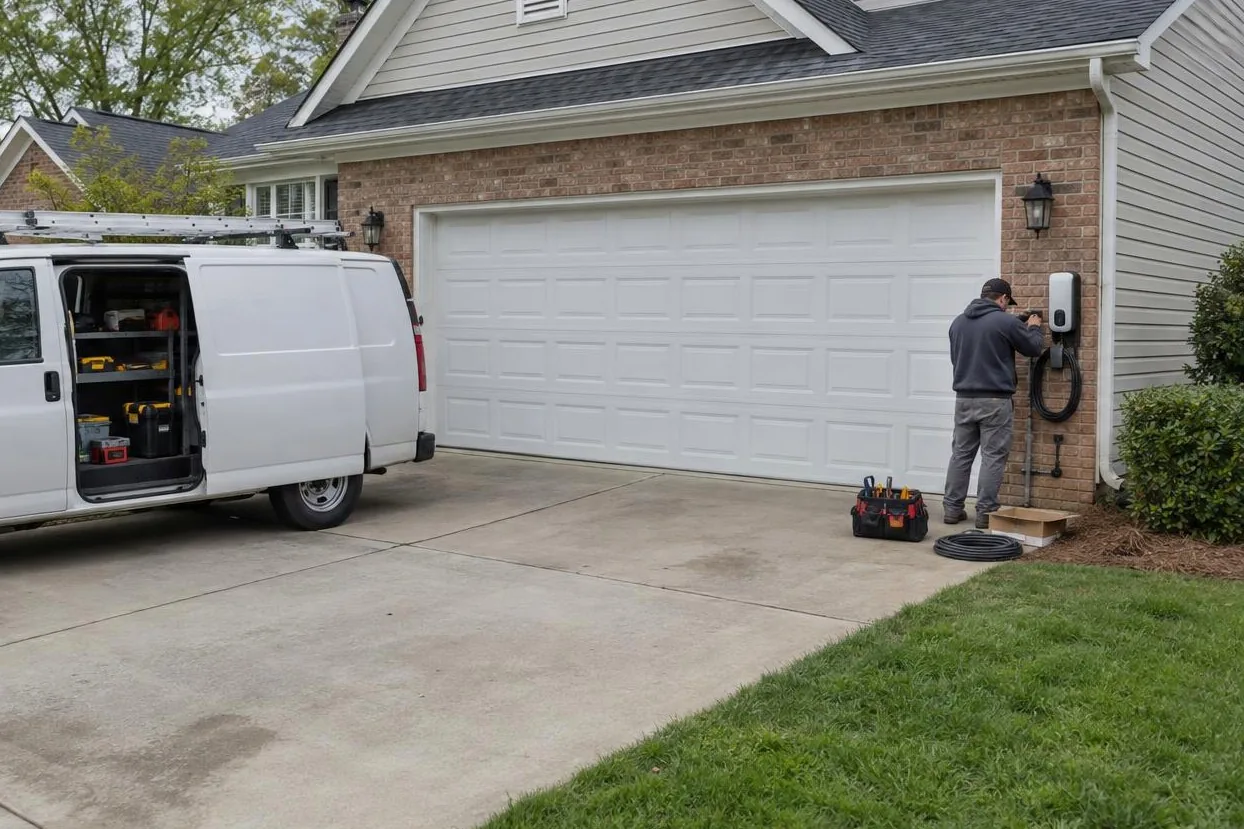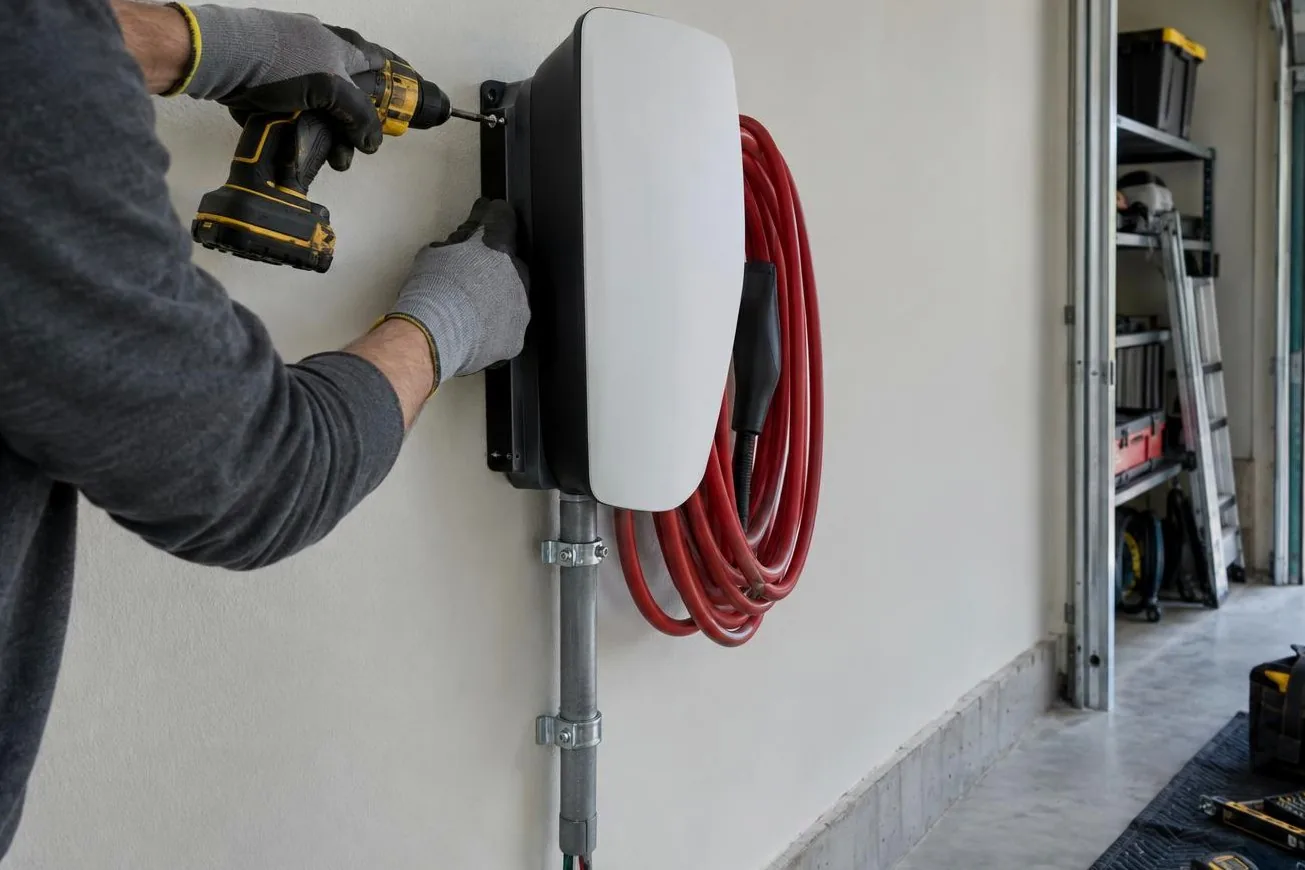
A Tesla Wall Connector delivers up to 11.5 kW at 48 amps, and that rate needs a 60-amp breaker feeding nothing else. We pull the circuit from your panel, mount the unit at the height that suits your parking and finish the setup in the Tesla app. Once it is paired with your Wi-Fi, you can schedule charging and the unit updates itself.
Garages with a Tesla and another brand are a fit for the Universal Wall Connector, which pairs the Tesla connector with a built-in J1772 adapter. Two Teslas can also run off one circuit with Tesla's power sharing.
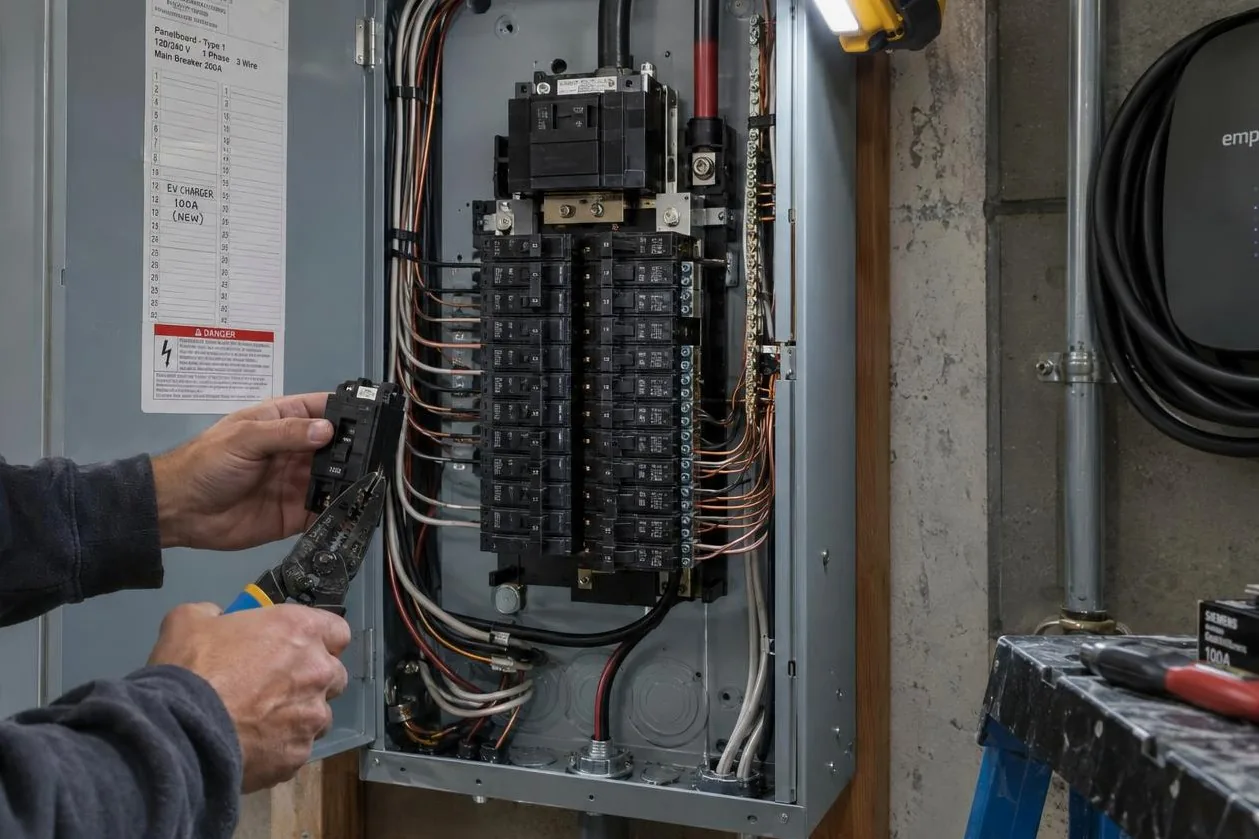
Huntersville's median home dates from 2004, and houses that young usually came with 200-amp panels that still have room for a charger. Older houses closer to the original town center are where a tight panel tends to turn up. A load calculation tells us which group yours falls into before anything is bought.
A tight panel has several possible fixes. Sometimes it is one breaker, sometimes load management, sometimes a subpanel by the garage, and occasionally a full 200-amp service. Whatever the answer, the crew installing your charger handles it in the same visit.
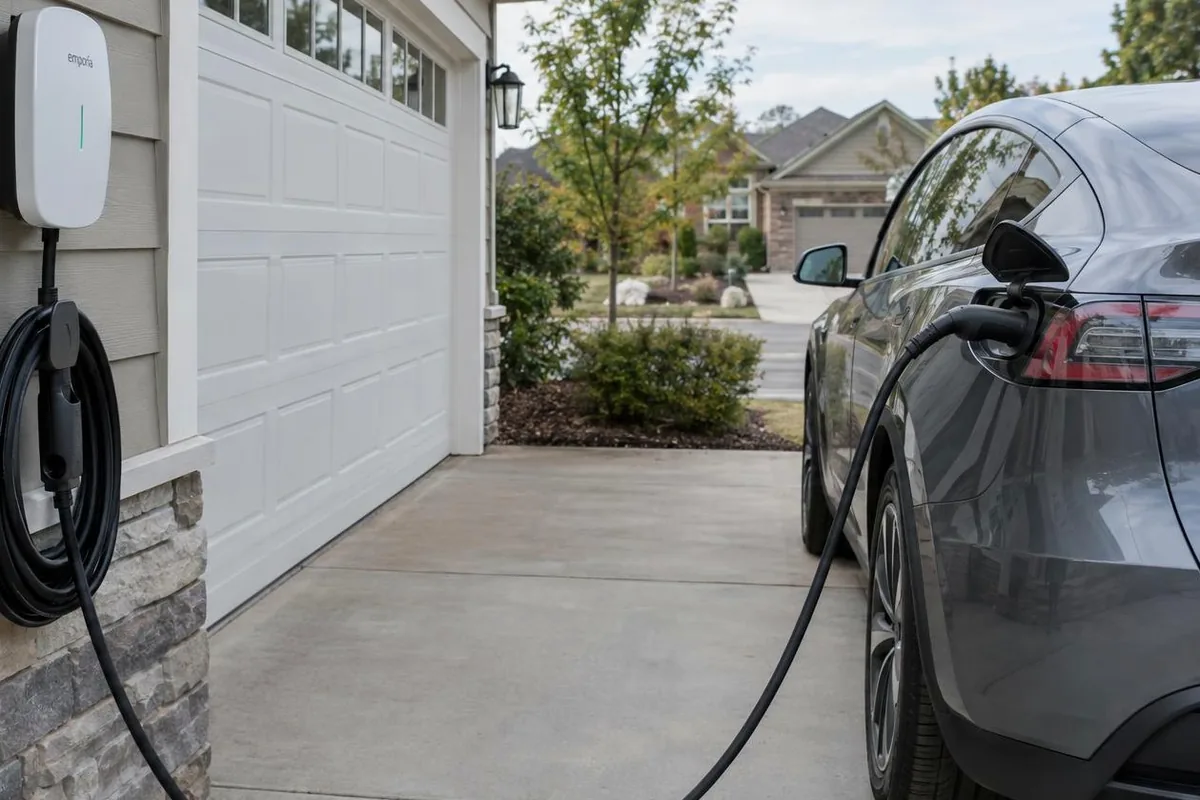
Level 2 Chargers for Every EV Brand
Most home EV charger installation in Huntersville means level 2 charger installation on a 240-volt circuit. Level 2 adds roughly 10 to 30 miles of range an hour, where a standard outlet adds 2 to 5. One car on a wall outlet can scrape by, but two cars, or a weekend trip, cannot. For a 29-mile Uptown round trip, the outlet needs 6 hours or more, and Level 2 finishes in about 1 to 3 hours.
We hang Wallbox, Emporia, ChargePoint, JuiceBox, Ford and Rivian chargers, hardwired or plugged in. The car on the other end might be a Hyundai Ioniq 6, a Ford F-150 Lightning, a Volkswagen ID.4 or a BMW iX. Choosing the charger after the panel check keeps its amperage matched to the panel and the car. Paying for a 48-amp unit makes little sense when the car's onboard charger accepts less.
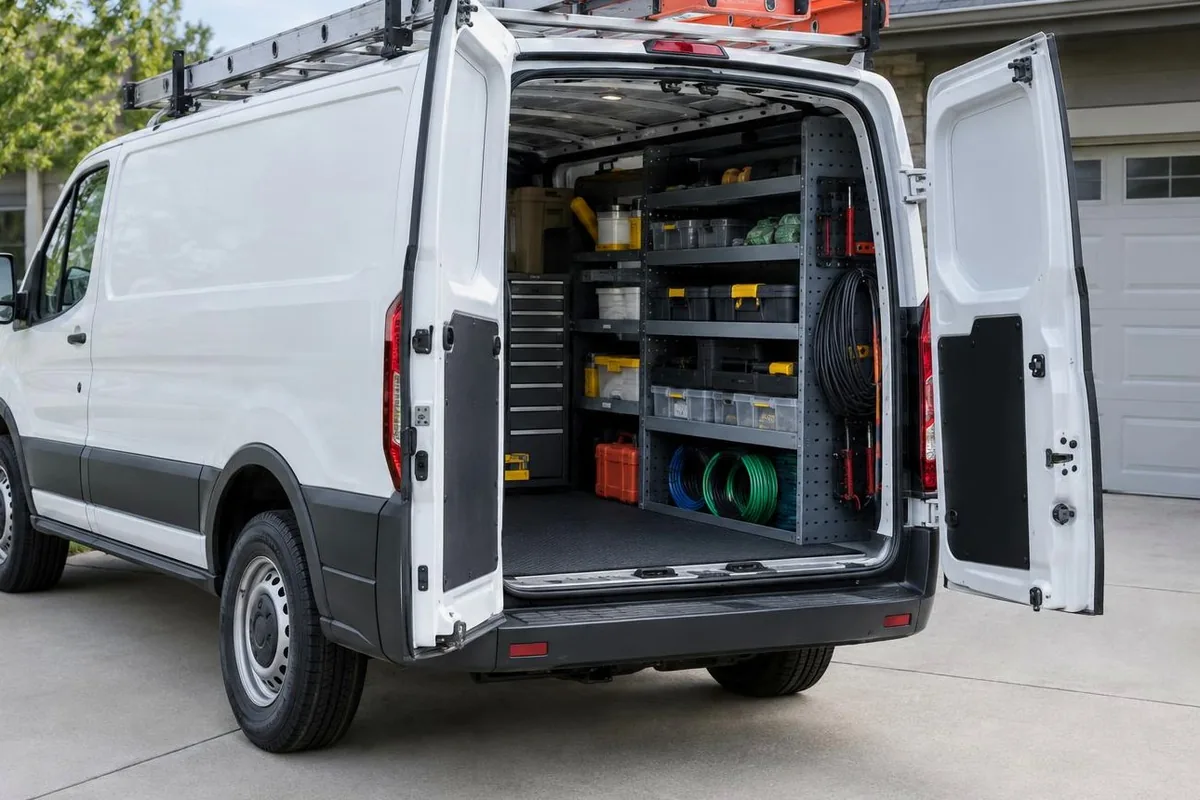
Power Sharing for Two-EV Garages
Two EV charging in one garage is common in Huntersville, and it is the job we plan for most carefully. If the panel has room, each charger gets a circuit of its own. If not, power sharing lets both chargers split one circuit, so each car charges slower while both are connected.
As many as six of Tesla's Gen 3 units can be tied together this way. A Tesla parked next to a Rivian R1T or a Mach-E pairs well with a Universal Wall Connector on one side.
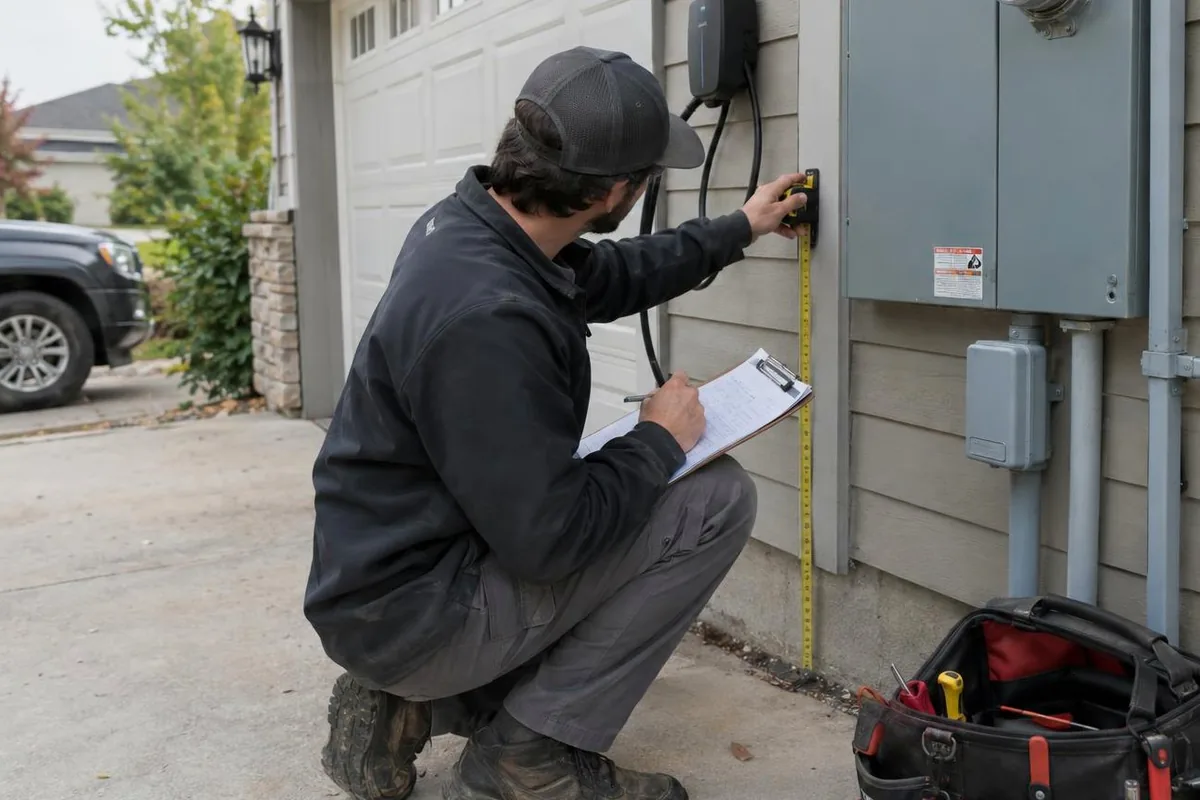
240-Volt Outlets for Plug-In Chargers
A 240 volt outlet for EV charging, the NEMA 14-50, gives a plug-in charger or the dealer's portable cord a dedicated home in the garage. A plugged-in charger can go with you when you sell the house, and it lets you change brands later without calling an electrician back. It is a good fit for a driver still deciding on a charger.
Chargers rated above 40 amps have to be hardwired, so an outlet suits the lower-amperage units. Sharing a dryer outlet is not an option we offer, since swapping plugs nightly wears the receptacle and invites mistakes. We install each receptacle on its own circuit, never shared with a dryer, and place it where the cord reaches the port without a stretch.
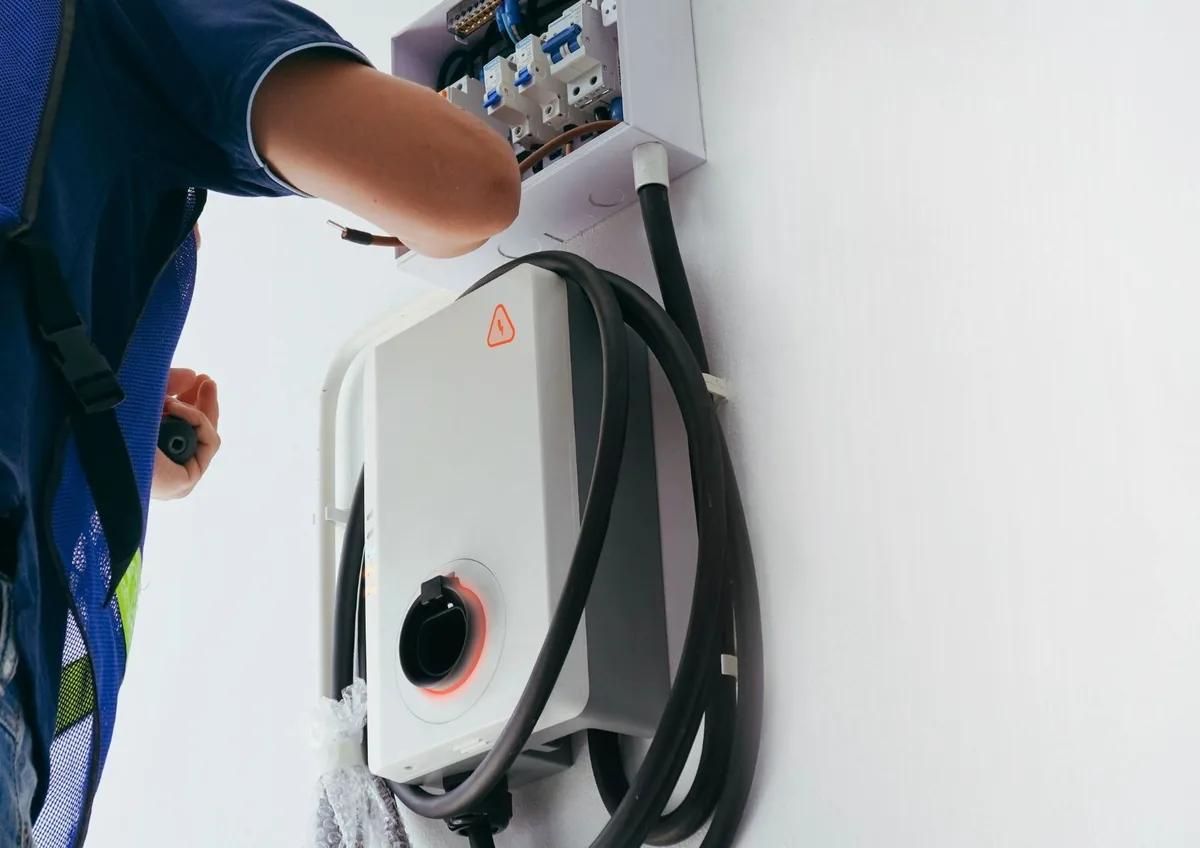
Outdoor and Driveway Charger Installs
Plenty of Huntersville cars park outside overnight. Mounting a charger on an exterior wall or a driveway post calls for a weather-rated unit. The wiring feeding it needs protection along its whole length, from the panel to the mount.
Duke Energy counts a charger outside the garage for its credit, provided it connects to the home's panel. We position outdoor units so the cord stays clear of walkways. A carport post works well when the panel sits on that side of the house, since the run stays short and the cost stays down.